Quality standards · six checks

Six fashion photography quality standards, and how each one is checked.

A generated garment image can look finished and still be wrong. These are the six things we check.

Get a photoshoot plan

Tell us what you sell. We'll come back with a photoshoot plan for your catalog.

Free. No card. We reply within one working day.

On-model and mannequin · from the photos you have
In short

Fashion photography quality standards are the checks a garment image should pass before it goes live. Ours are six: the same model, the same garment, the right type and length, a clean set, true color and a score with its reasons. On the default setting, software checks all six after each image is made.

Key takeaways
  • A model reference holds one face across a shoot, and the check flags a stranger.
  • Print, construction, type and length are judged against your own garment photo.
  • On the default setting, color is measured on the garment in ΔE00 wherever the garment can be isolated.
  • The score is advice: a flagged image is still delivered and charged, and the retry is your call.

Last updated · QuickAds Editorial Team

Every frame in the six standards is generated. The two demonstration inputs are a published product photo and a published campaign photo, and neither is client work.

The six standards

What are the quality standards for fashion photography? Six, each with its own check.

Each standard says what a garment image should get right, how the software checks it and where the check stops.

STD-01 · Model

The model you picked is the one in the frame.

One face across a range reads as one shoot. Your model reference goes into every image, and the check compares each face, hair, body and skin tone with it.

In a bulk shoot, pick several models and the garments are shared out evenly between them, within each model's gender.

Flagged asThe person in the output is not the picked model.

Same model
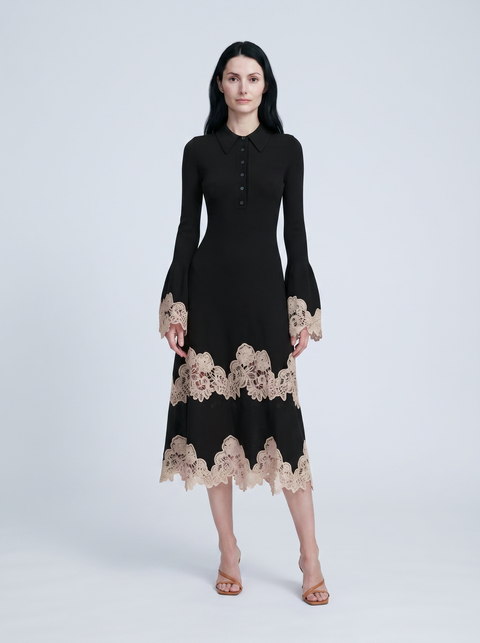
A woman with long dark hair in a long-sleeve black knit dress with beige lace panels, full length on a pale sweepGenerated
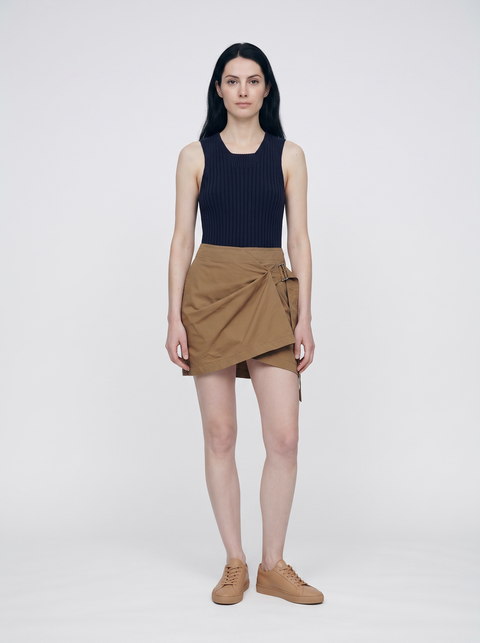
The same woman in a navy ribbed tank and a tan wrap skirt, full length on a pale sweepGenerated

Two frames made with the same model reference. Check the face, the hair and the framing.
STD-02 · Garment

The garment that comes back is the one you sent.

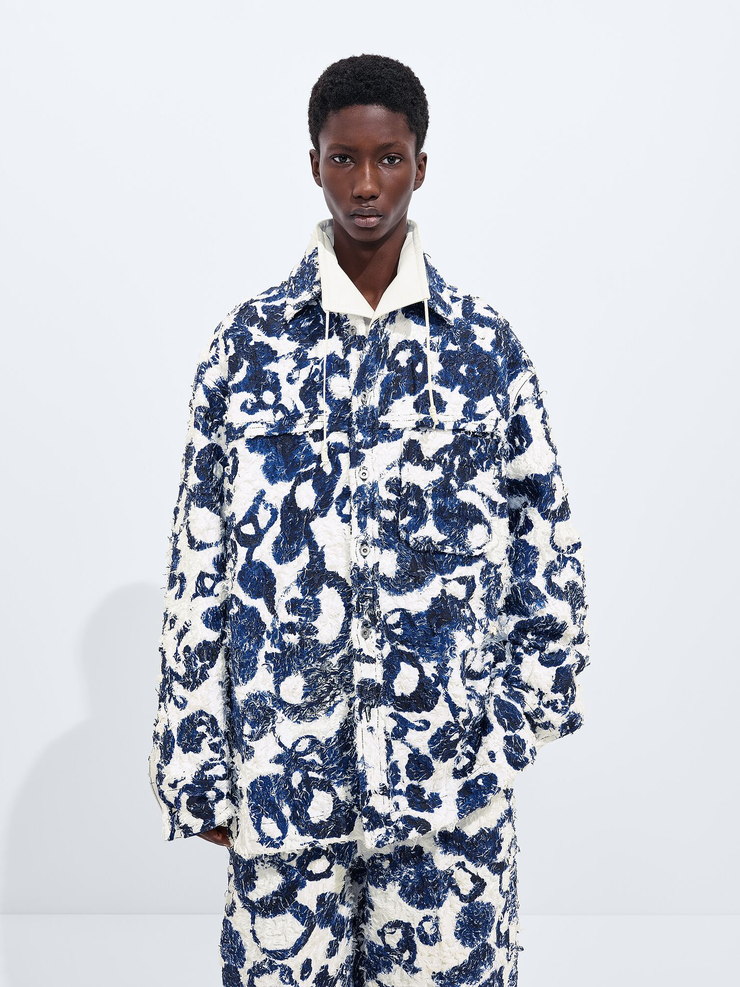
Left alone, image models redraw clothes. On the default setting your photo is read first, so the prompt carries its color, material and print, with every motif and trim at true scale. The check scores print, texture and construction against it.

Flagged asA construction element was lost or invented (straps, closure, collar, hem).

The print
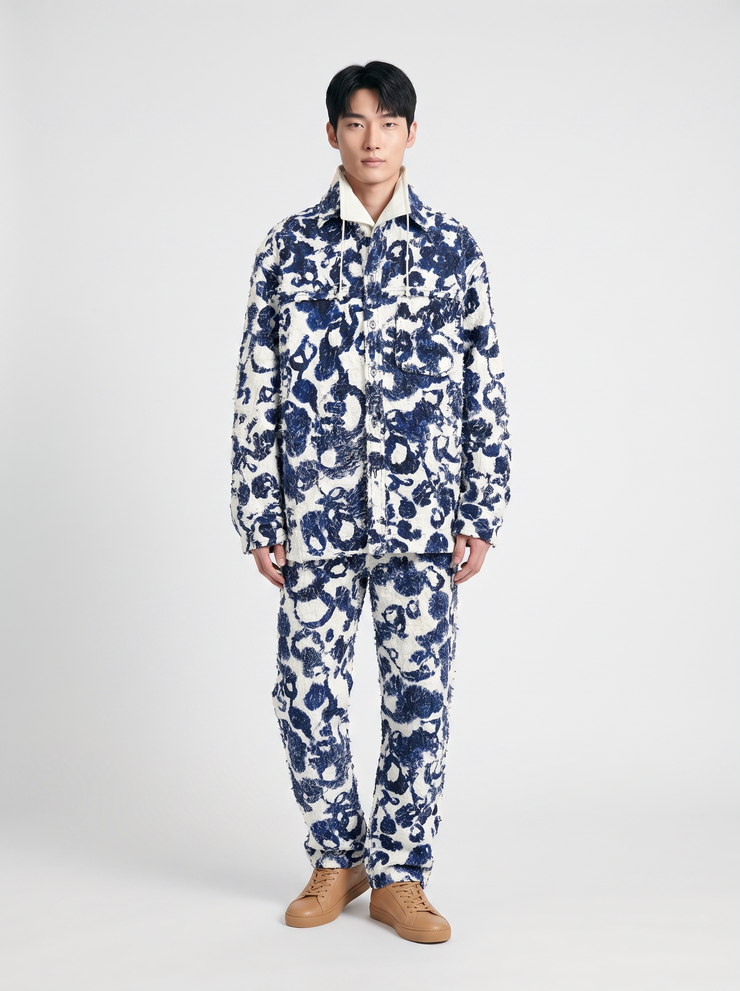
A navy and off-white abstract print overshirt and pantsDemonstration input
The same print set on a different modelGenerated

The motif and its two blues held. The cut-thread texture reads flatter than in the photo, and the print is close without being a stitch-for-stitch match.

STD-03 · Type and length

A tee stays a tee.

A frame can look well made and still be the wrong garment, such as a top worn as a dress. Each garment carries a type, and the prompt keeps it in frame from top to hem. The check scores fit and length.

Flagged asThe garment covers the wrong part of the body.

The crop
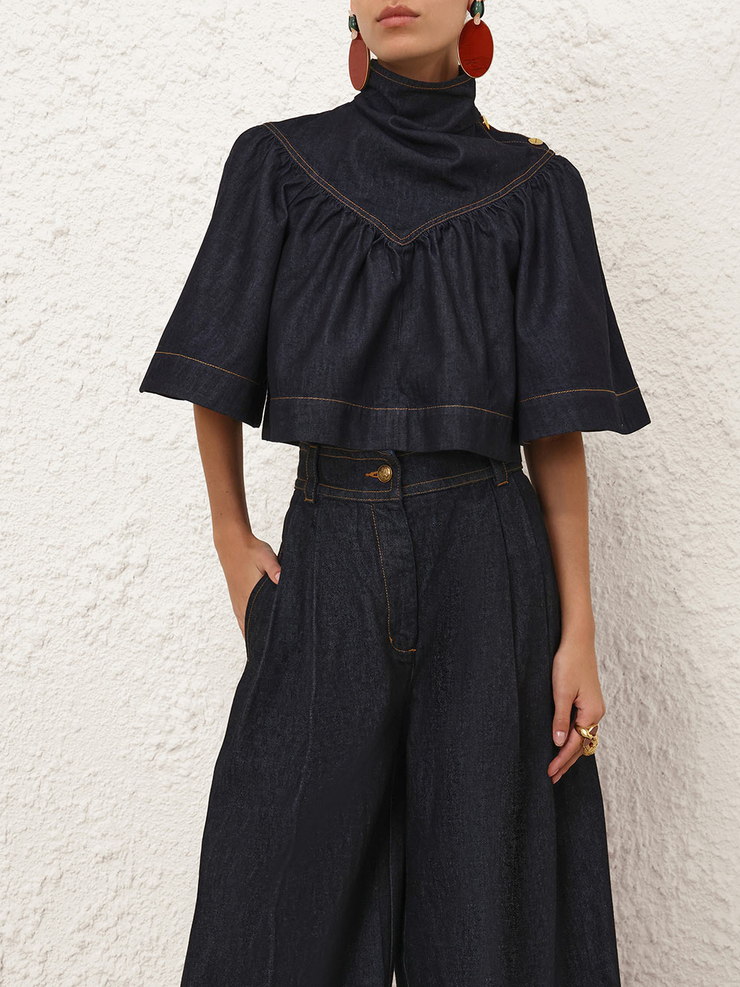
Close photo of a dark denim top and wide denim pants, cut off at the thigh against a plaster wallDemonstration input
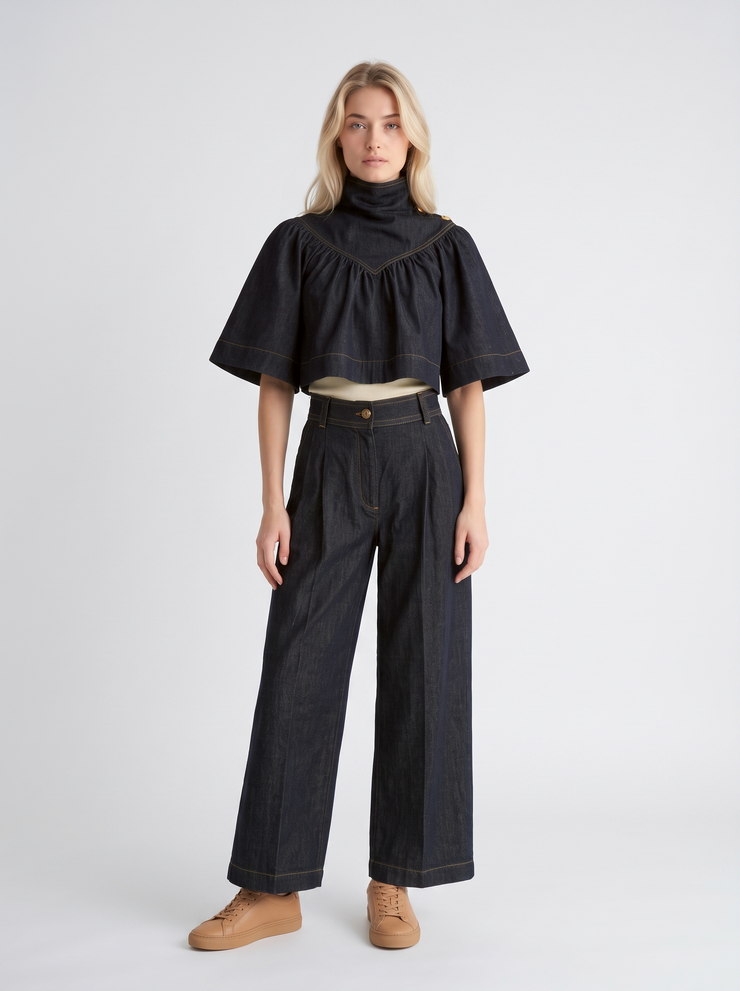
The denim top and wide denim pants full length on a studio sweepGenerated

The photo stopped at the thigh. The gathered yoke and the half sleeve held, the wide leg was built down to the hem, and a cream layer appeared at the waist.

STD-04 · Set

The set is the one you picked.

A plain sweep should come back as one unbroken surface, with nothing added behind the shoulder. The background comes from one of 30 presets or your brief, and the check marks down a backdrop or light that contradicts it.

In a bulk shoot, the shoot page counts the plain backgrounds that don't match the rest.

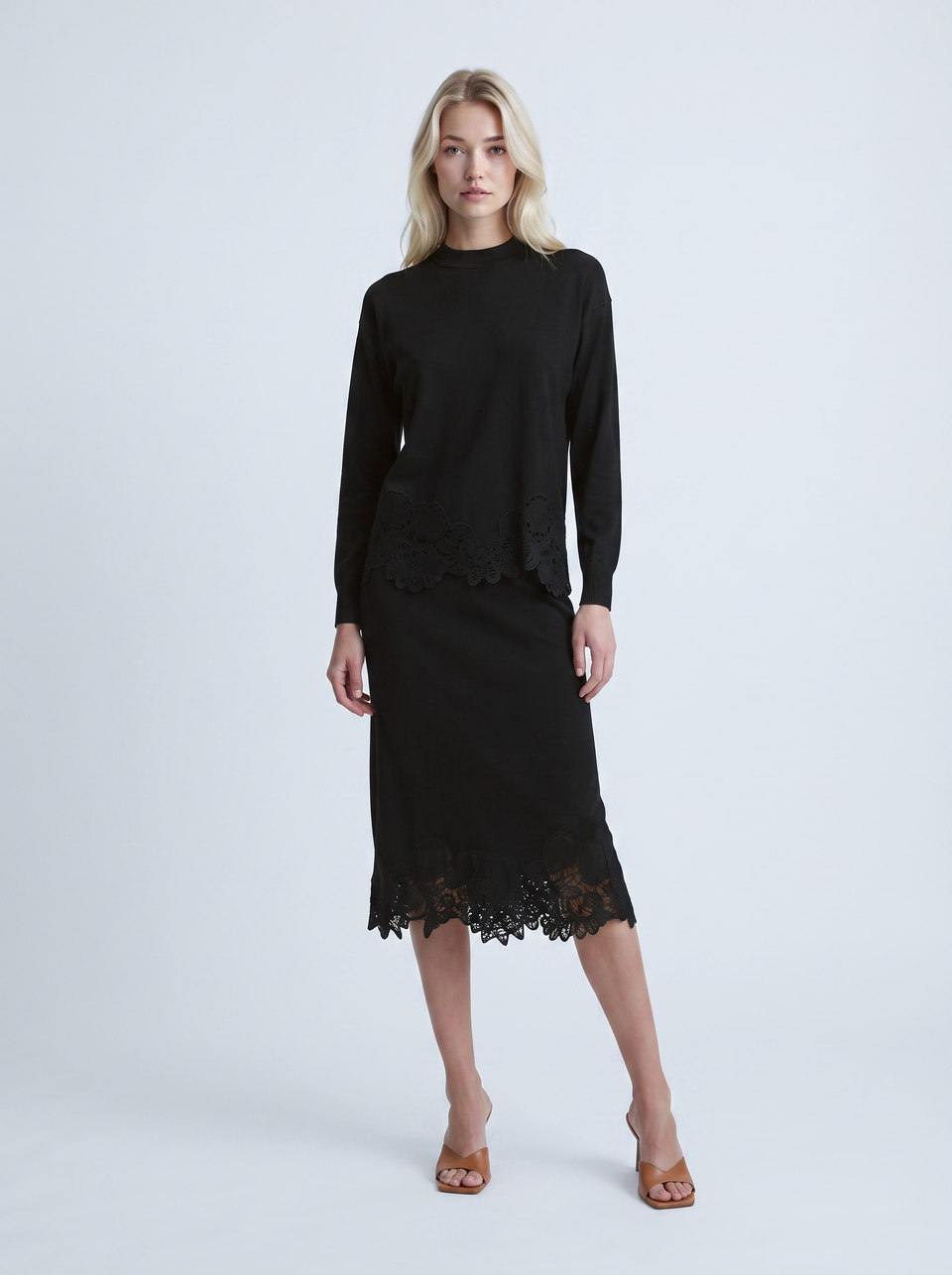
A blonde woman in a black knit top and midi skirt with lace hems, full length on an unbroken pale gray sweepGenerated
STD-05 · Color

Color is measured on the garment itself.

On the default setting, each garment's color is measured against your photo in ΔE00, wherever the garment can be isolated. A bounded correction is kept only when it measures closer.

You see it as the color score out of 10. A frame whose color comes back far off is made again once at no charge, and kept only if closer.

2.87Median ΔE00 as returned
0.68With the correction replayed on a plain set

One 120-garment test on August 18, 2026, run on two image models, with 220 of 240 frames measured.

Color, measured
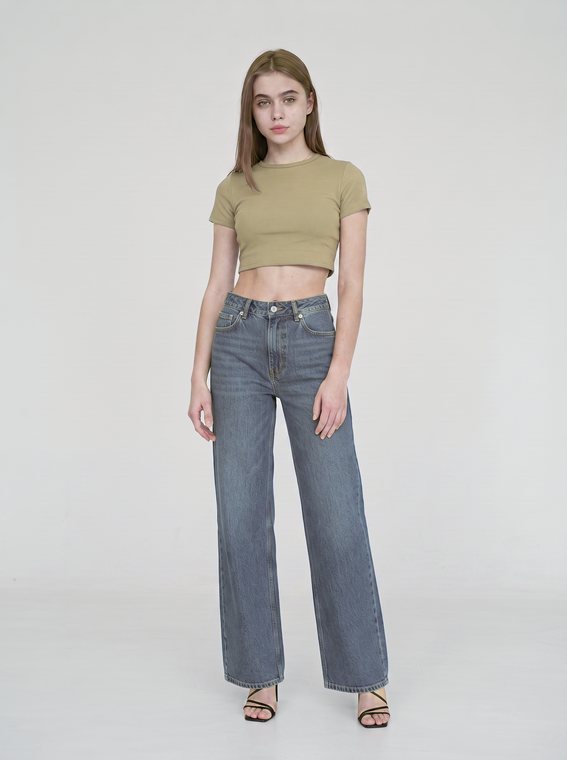
A woman in an olive crop top and wide-leg jeans, with the jeans darker and flatter, as the image came backGenerated
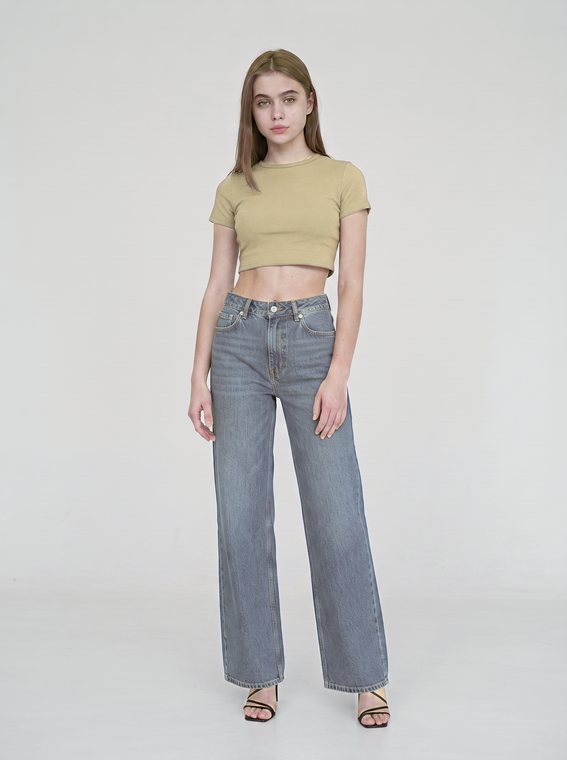
The same frame after the color correction, with the jeans lighter and the crop top lighter tooGenerated

One jean from our August 18, 2026 test, generated from a published product photo: ΔE00 9.0 as returned, 1.3 with the correction replayed on a plain set. The replay was never a delivered file, and the crop top came out lighter too.

STD-06 · Score

The score comes with its reasons.

On the default setting, each image gets a keep-or-retry score out of 100, part scores out of 10 and the reasons behind any retry.

The score is advice: a flagged image is still delivered and charged. The keep line is still a first guess that hasn't been calibrated.

On a managed shoot, our team looks at every image before the set reaches you.

Looks rightNeeds reviewCheck inconclusive

The three verdicts, as the app labels them.

At a glance

How is each standard checked? What it is held against, and where it shows.

Four are judged by the automatic check, color is measured, and the score brings all five together.

The six fashion photography quality standards, by how each one is checked and where the result shows in the app.
StandardHow it is checkedWhere it shows
ModelJudged against your model referenceShows as the Model score
GarmentJudged against your garment photoShows as the Pattern, Texture and Construction scores
Type and lengthJudged against your photo and the garment's typeShows as the Fit score
SetJudged per image, and measured across a bulk shootShows as the Prompt score and a shoot-page note
ColorMeasured in ΔE00 on the garment onlyShows as the Color score, out of 10
ScoreScored out of 100 from the other fiveShows as Looks right, Needs review or Check inconclusive

Where the garment can't be isolated, the color score is judged instead. ΔE00 is the CIEDE2000 color-difference formula. Source

Questions

What people ask about image quality checks.

What are quality standards in fashion photography?

They are the checks a garment image should pass before it goes on a product page or into an ad. QuickAds holds generated images to six: the model, the garment, the type and length, the set, measured color and a keep-or-retry score with its reasons. On the default setting, software checks all six.

How is color accuracy measured in product photos?

It is usually measured as ΔE00, the CIEDE2000 difference between two colors, where a lower number means a closer match. On the default setting, QuickAds measures each garment against your own photo, on the garment only, wherever it can be isolated. In one 120-garment run in August 2026, the median was 2.87 as returned and 0.68 with the correction replayed on a plain set.

What happens when an image fails a quality check?

It gets a Needs review verdict with its reasons, such as a different garment or the wrong model. The score is advice, so a flagged image is still delivered and charged, and you decide whether to retry it. In a bulk garment shoot on models, you can switch on one automatic re-shoot of each flagged image, billed at the same rate as the original.

Can AI keep the same model across a whole photoshoot?

The model reference is what holds the same face, hair and build across a shoot, because it goes into every image. The automatic check compares each frame with that photo and flags a person who is not the picked model. With several models picked, the garments are shared out evenly between them, within each model's gender.

Do I see the color measurement for each image?

You see it as the color score out of 10 inside the keep-or-retry verdict, and the ΔE figure itself isn't shown in the app. When the garment can't be isolated from the rest of the frame, the color score comes from the automatic check's own judgment instead of a measurement. In one August 2026 run, 20 of 240 frames couldn't be isolated.

Does a person check the images as well?

On the software, the checks are automatic and you make the call on each flagged image. The check is advice and has missed a different garment before, so a person should look at every frame. That is the line we work to: AI handles form, humans own substance.

Next

Your own garments, held to all six.

QuickAds is a performance creative company that runs the whole chain: creative intelligence, creative strategy, creative production, influencer marketing and campaign management. Ecommerce fashion photography is the link that puts every garment in your range on a model or a mannequin, and scores each image against these six.

Keep reading