The fashion QC eye test. Which frame matches the garment?
Each round sets two generated frames or two color patches side by side. Pick the one that matches the garment, then see what differs.
Tell us what you sell. We'll come back with a photoshoot plan for your catalog.
Free. No card. We reply within one working day.
A fashion QC eye test sets two versions of a garment image side by side and asks which one matches the garment. Ours has 11 rounds from our own test runs and color measurements, from a swapped garment and a lost hem to garment color that drifted. The color rounds are the hardest to call by eye.
- Check the shape first: the right garment, its type, its length and its closures.
- Color drift hides in a full-length frame, so crop to the garment and compare it with the product photo.
- Look at the wall too, since a tinted backdrop makes a correct garment read cool.
- An automatic check can miss a swapped garment. In one test run with our rules off, our check passed a plain tee that came back in place of a cape top.
- On the default setting, QuickAds color-measures garment images against your photo and scores each one keep or retry. The score is advisory.
Last updated · QuickAds Editorial Team
Every photo in the test is generated. The garment photos behind them come from published product and campaign pages, and none of them is client work. The color patches are converted from values we measured on the files or on standard color profiles.
Take the fashion QC eye test. 11 rounds, one pick each.
Pick the frame or patch that matches the garment. After each pick you see which one drifted, the measurement where there is one and where it comes from.
The product is a denim cape top with a high neck. Which frame is selling it?
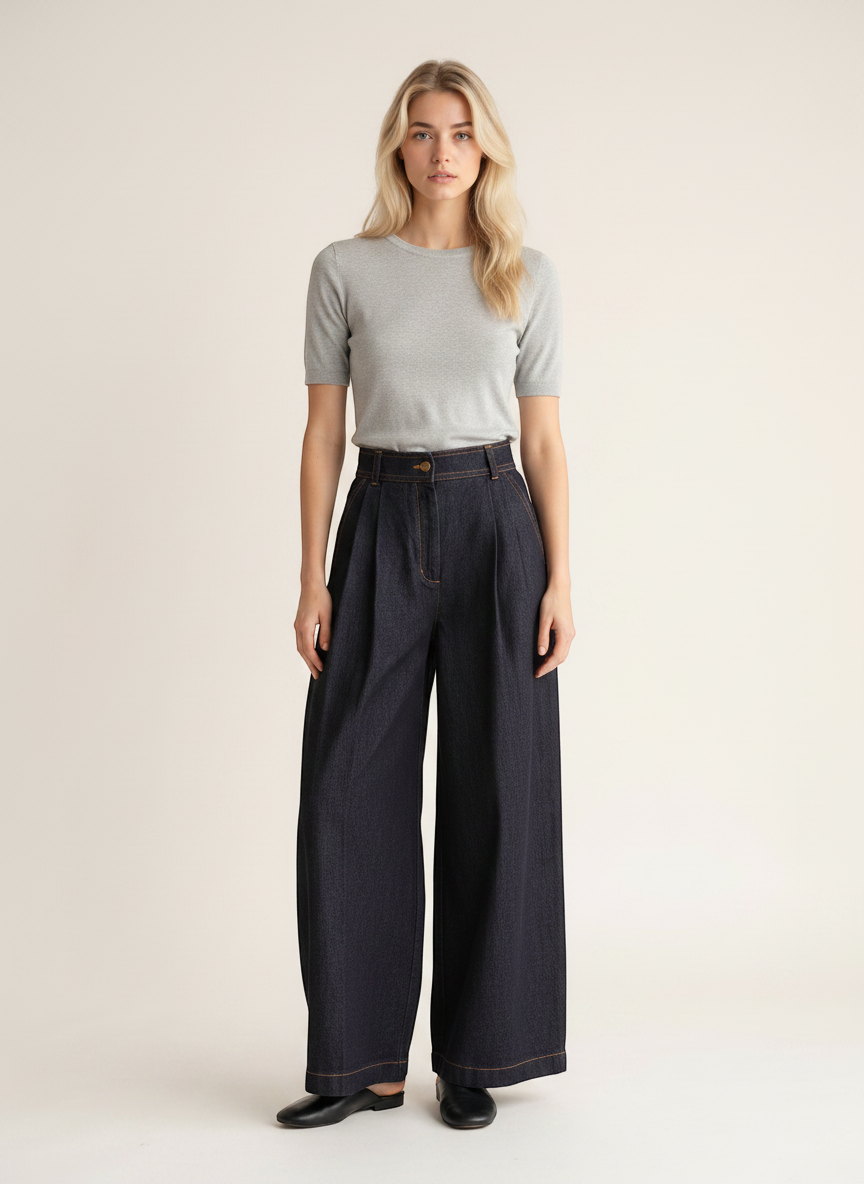 Generated
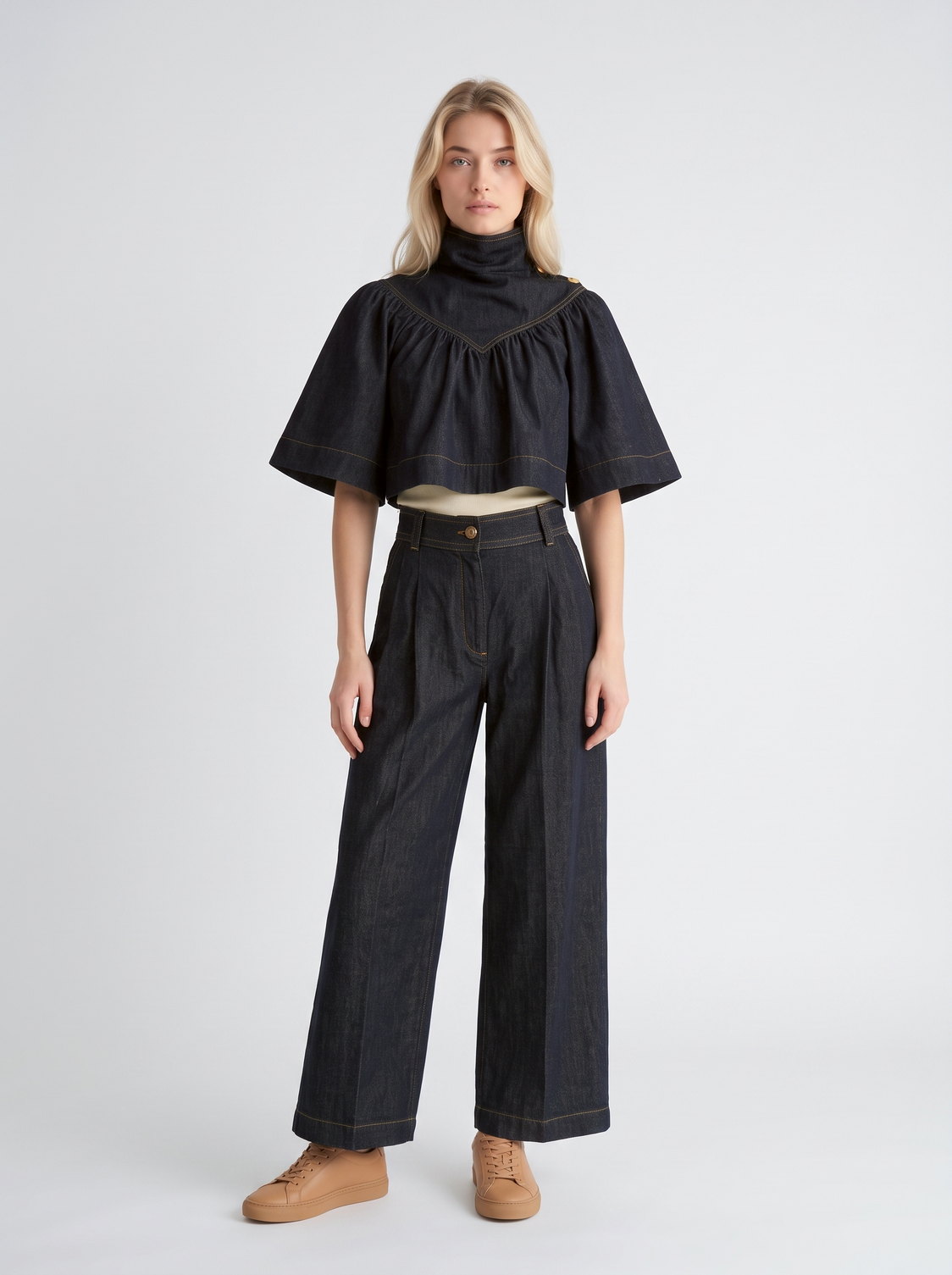 Generated
The other 10 rounds, the answers and your score load on the page.
How do you check a generated garment image? Shape first, color last.
Set the frame beside the product photo at full size and work from the biggest change to the smallest. The six quality standards go further, with how each one is checked in the product.
Is it the garment you sent?
Check the type, the length, the neckline and the closures before anything smaller. In the first two rounds, the wrong frame has the right model and looks finished, and the garment is wrong.
Crop in, then compare
A garment can fill a tenth of a full-length frame, so its color drift hides in a thumbnail. Crop to the garment and hold it beside the product photo on a neutral screen.
The wall and the file
A tinted wall makes a correct garment read cool, so check the backdrop too. Send product photos in sRGB where you can: a wide-gamut photo read as sRGB comes out duller.
What do the 11 rounds test? Six kinds of drift.
Each row is one kind of difference in the test, how to spot it by eye and what QuickAds does about it on the default setting. The keep-or-retry score is advisory: a flagged image is still delivered.
| Drift | In the test | How to spot it | What we do |
|---|---|---|---|
| Wrong garment | One round: a cape top came back as a plain tee | Check that the product is in the frame before the model or the set | Our score is built to flag a different garment, and in a test run with our rules off it passed this one |
| Lost length | One round: an ankle-length shirtdress came back as a shirt | Check the hem against the product photo, then the sleeves | We ask for the whole garment in frame, top to hem, and the score rates fit and length |
| Garment color | Six rounds: a dress, a blazer, a skirt, jeans, shorts and pants | Crop to the garment and compare it with the product photo on a neutral screen | We measure the garment's color against your photo wherever it can be isolated, and keep a bounded correction only when it measures closer |
| Tinted wall | One round: a gray sweep that came back with a blue cast | Check the wall for a tint, since it sets how the whole frame reads | When the brief asks for a neutral sweep, we pull a tinted backdrop toward neutral around the model and the garment |
| Color profile | One round: a green from a wide-gamut photo, read two ways | Check that your photos are exported in sRGB, or that your tool reads their color profile | We convert each garment photo through its color profile before any image is made |
| Our own correction | One round: a black dress crushed by an early version of our color pass | Check that a dark garment still shows its texture after any color correction | We measure the garment region wherever we can find one, so in those frames a bright backdrop can't steer the correction |
ΔE00 is the CIEDE2000 color-difference formula. The figure stays in our logs, and you see garment color as one part of the score. Source
What people ask about checking fashion images.
What is a fashion QC eye test?
A fashion QC eye test is a short visual quiz on garment images, where QC means quality control. Each of our 11 rounds shows two generated frames or two color patches, and you pick the one that matches the garment. After each pick you see what differs and the measurement where one exists, and nothing you pick is stored or sent.
How do you check AI-generated product photos for mistakes?
Set each frame beside the product photo at full size and work from the biggest change to the smallest. Check the shape first: the right garment, its type, its length and its closures. Then check prints, trims and stitching, and judge color last, on a neutral screen with the backdrop in view, since a tinted wall makes a correct garment read cool.
Can you see small color differences in clothing photos?
Often not, when the garment fills a small part of a full-length frame. In one 120-garment run in August 2026, a jean measured ΔE00 9.0 as returned and 1.3 with the correction replayed on a plain set, a shift that is hard to see on a thumbnail. Cropping to the garment and setting it beside the product photo makes the difference easier to see.
Does QuickAds measure the color of every image?
On the default setting, each garment image is color-measured against your photo wherever the garment can be isolated, and the figure stays in our logs. You see garment color as one part of a keep-or-retry score, which is advice: a flagged image is still delivered and charged. Where the garment can't be isolated, that part of the score is judged instead of measured.
Where do the images in the eye test come from?
Every photo in the test is generated. Two rounds set a frame from another engine with our rules switched off beside our full pipeline's frame for the same garment photo, and five are garment crops from one 120-garment run, as returned and with the correction replayed on a plain set. The color patches are converted from values we measured on the files or on standard color profiles.
Does a person review flagged images?
On the software, the checks are automatic and you decide which flagged images to retry. On a managed shoot, our team looks at every image before the set reaches you. That is the line we work to: AI handles form, humans own substance.
Your own garments, on a model, from one photo.
QuickAds is a performance creative company that runs the whole chain: creative intelligence, creative strategy, creative production, influencer marketing and campaign management. Ecommerce fashion photography is the link that puts every garment on a model or a mannequin form from one photo, and on the default setting color-measures each garment against that photo wherever it can be isolated.