
Mastering AI Videos: A Step-by-Step Guide on How to Make AI Videos
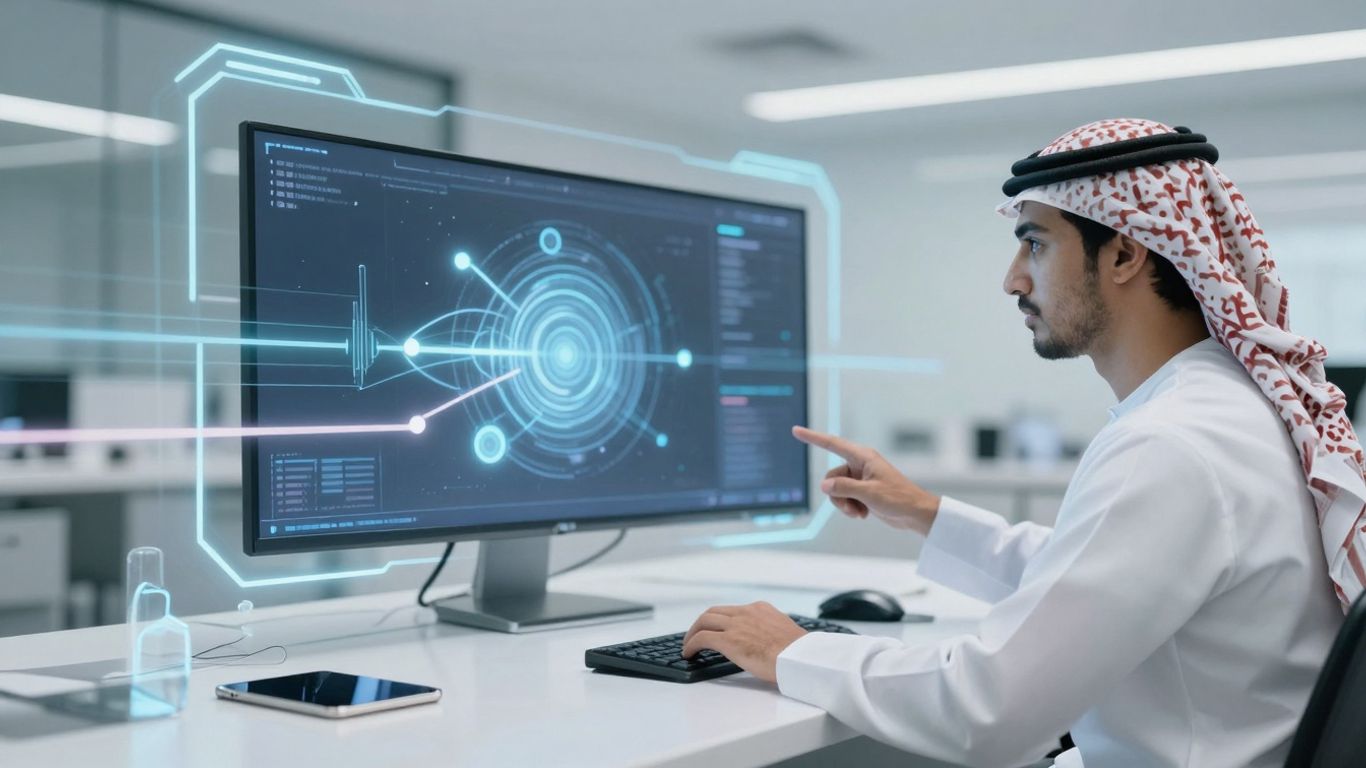
Ever wondered how to make AI videos? It might seem complicated, but it's actually getting pretty straightforward. We're going to walk through how to use these new AI tools to make videos. You can speed up how you make videos, get cool-looking pictures, and create all sorts of ideas. We’ll cover the main things to think about when you're making AI videos and what tools you can use. Let's get started on how to make AI videos.
Key Takeaways
- AI video platforms are tools that help you create videos using artificial intelligence.
- To make AI videos, you need a clear idea and to know who you're making the video for.
- Getting good results from AI video tools means learning how to give them clear instructions, or prompts.
- There are many AI video tools out there; pick the ones that fit what you need to do.
- After you generate your video, you'll likely need to do some editing to make it look just right.
Understanding AI Video Generation
So, you're curious about making videos with AI? It's a pretty new thing, but it's changing fast. Basically, AI video generation means using computer programs to create video content. Instead of filming with a camera, you tell the AI what you want, and it builds the video for you. It's like having a digital assistant that can draw, animate, and edit, all based on your instructions.
What Are AI Video Platforms?
These are the software tools that make AI video creation happen. Think of them as the studios where AI movies are made. You give them text descriptions, maybe some images or other video clips, and they use their smarts to put it all together. There are quite a few out there now, each with its own way of working and what it's good at. Some are better at making realistic people, others are great for animated scenes, and some can even take a script and turn it into a full video with voiceovers.
- Text-to-Video: You type a description, and the AI creates a video clip. This is the most common type.
- Image-to-Video: You provide a still image, and the AI makes it move or animates it.
- Video-to-Video: You give the AI an existing video, and it changes the style or content based on your prompts.
- AI Avatars: These platforms create realistic digital humans that can speak your script.
The core idea is to translate your ideas into visual motion without needing traditional filming equipment.
The Potential of AI in Video Creation
This technology opens up a lot of doors. For starters, it can make video creation much faster and cheaper. If you need a quick explainer video or some social media clips, AI can often do it in minutes, not days. It also means people who don't have big budgets or film crews can still make professional-looking videos. You can experiment with styles and concepts that would be too difficult or expensive to film in real life. Imagine creating a historical scene or a fantasy landscape without leaving your desk.
AI video tools are becoming more accessible, allowing individuals and small businesses to produce content that was previously only possible for large studios. This democratization of video production is a significant shift.
It's not just about saving time and money, though. AI can also help you come up with new ideas. Sometimes, the AI might generate something unexpected that sparks a whole new creative direction you hadn't considered. It's a tool that can work alongside your own creativity, not just replace it.
Crafting Your AI Video Vision
Before you even think about typing a single prompt into an AI video generator, you need to have a clear idea of what you want to create. It sounds obvious, right? But honestly, a lot of people jump straight into the tech without really thinking about the 'why' and 'what' of their video. This is where you lay the groundwork for everything that follows.
Defining Your Video Concept
What story are you trying to tell? What message do you want to get across? Is it a short, punchy social media clip, a more detailed explainer, or maybe a piece of digital art? Jotting down the core idea is the first step. Think about the mood you're going for – is it serious, funny, whimsical, or informative? The clearer your concept, the easier it will be to guide the AI.
Here are a few questions to get you started:
- What is the main subject or theme?
- What emotions should the viewer feel?
- What is the desired length and format?
- What kind of visual style are you aiming for (e.g., realistic, animated, abstract)?
Don't be afraid to start with a rough sketch or a few keywords. The goal here isn't perfection, but direction. You're building a mental blueprint.
Identifying Your Target Audience
Who are you making this video for? Knowing your audience helps shape the content, tone, and style, especially when explaining topics like website development. A video for tech enthusiasts will be different from one aimed at young children or busy professionals. Consider their interests, their level of understanding of the topic, and what kind of content they typically engage with. This will influence everything from the complexity of the visuals to the language used.
Think about:
- Demographics: Age, location, interests.
- Platform: Where will this video be seen (e.g., YouTube, TikTok, a company website)?
- Purpose: What do you want the audience to do or think after watching?
Understanding your audience is key to making a video that connects. It's not just about making something pretty; it's about making something that works for the people you want to reach. If you're looking for tools that can help with different video needs, you might want to explore the top AI video generators.
Mastering AI Video Prompting Techniques
The Art of Effective Prompting
So, you've got an idea for an AI video, but how do you actually tell the AI what you want? It's all about the prompts. Think of it like giving directions to someone who's never been to your house before. You can't just say 'go to my place.' You need to be specific. The better your prompt, the closer the AI's output will be to your vision. It takes a bit of practice, but once you get the hang of it, you'll be amazed at what you can create.
Structuring Your Prompts for Clarity
When you're writing a prompt, it helps to break it down. Imagine you're ordering a custom pizza. You wouldn't just say 'pizza.' You'd say 'a large, thin-crust pizza with pepperoni, mushrooms, and extra cheese.' AI prompts work similarly. Here's a simple structure that often works well:
- Subject: What is the main thing in your video? (e.g., 'a golden retriever,' 'a bustling city street,' 'a futuristic spaceship')
- Action/Setting: What is the subject doing, or where is it? (e.g., 'running through a field,' 'at sunset,' 'orbiting a red planet')
- Style/Mood: What should it look and feel like? (e.g., 'cinematic lighting,' 'dreamy atmosphere,' 'documentary style,' 'vibrant colors')
- Camera Angle/Shot Type: How should it be filmed? (e.g., 'wide shot,' 'close-up,' 'drone footage')
Let's try an example. Instead of 'dog running,' try:
'A happy golden retriever running through a sun-drenched meadow, golden hour lighting, cinematic, wide shot.'
See the difference? It gives the AI a lot more to work with.
Iterative Prompt Refinement
Your first prompt probably won't be perfect. That's totally normal. The real magic happens when you start tweaking and refining. You generate a video, see what you like and what you don't, and then adjust your prompt accordingly. It's a back-and-forth process.
Here's a quick way to think about refining:
- Generate: Put your initial prompt into the AI tool.
- Review: Watch the video. What's good? What's missing? What's weird?
- Adjust: Tweak your prompt based on your review. Maybe add more detail about the lighting, change the camera angle, or specify the subject's expression.
- Repeat: Generate again with the new prompt.
Don't get discouraged if the first few tries aren't exactly what you pictured. AI video generation is still a developing field, and learning how to communicate your ideas effectively is a skill that grows with practice. Think of each generation as a learning opportunity to get closer to your desired outcome.
For instance, if your 'dog running' video looks a bit stiff, you might add 'energetic movement' or 'joyful expression' to your prompt. If the lighting isn't right, you could specify 'soft, diffused light' or 'harsh shadows.' Keep experimenting; you'll find the sweet spot.
Selecting the Right AI Video Tools
Alright, so you've got your video idea all mapped out. Now comes the part where you actually pick the software to bring it to life. It can feel a bit overwhelming with so many options out there, right? But don't sweat it. We just need to figure out what works best for what you're trying to do.
Exploring Available AI Video Platforms
There are a bunch of different AI video tools popping up all the time. Some are really good at making realistic people talk, others are better at creating animated scenes, and some can even turn text into a full video with voiceovers. It's like picking the right tool for a specific job. You wouldn't use a hammer to screw in a bolt, would you?
Here are a few types you might run into:
- Text-to-Video Generators: You type in what you want, and the AI tries to make a video from it. Think of it like giving a director a script.
- AI Avatar Tools: These let you pick a digital person (an avatar) and make them say whatever you type, often with lip-syncing.
- Video Editing Assistants: Some tools use AI to help you speed up editing, like automatically cutting out pauses or suggesting music.
- Image-to-Video Converters: You give it a still image, and the AI makes it move or adds effects.
Choosing Tools Based on Your Needs
So, how do you pick? Think about what your video needs to do. Are you making a quick explainer video for a product? Or maybe a short animated story? The goal is to match the tool's strengths to your project's requirements.
Consider these points:
- What's your budget? Some tools are free to try, others have monthly fees, and some can get pretty pricey if you need advanced features.
- What kind of output do you need? Do you need super realistic footage, or is a more stylized look okay? Some AI is better at one than the other.
- How much control do you want? Some tools give you a lot of fine-tuning options, while others are more automated and give you less direct control.
- What's the learning curve like? Are you looking for something super simple, or are you willing to spend time learning a more complex program?
Picking the right tool isn't just about features; it's about finding something that fits your workflow and helps you get the job done without too much fuss. It's better to start with a tool that does one thing well and you understand, rather than a super complicated one you never quite figure out.
Don't be afraid to try out a few different platforms. Most of them have free trials or limited free versions. Play around with them, see what feels right, and then make your choice. It's all part of the process.
Generating and Refining Your AI Video
Step-by-Step Video Generation Process
Okay, so you've got your concept and your prompts ready. Now comes the fun part: actually making the video. Most AI video platforms work in a similar way, but there are a few general steps you'll follow. First, you'll input your carefully crafted text prompt into the AI tool. Think of this as giving the AI its instructions. The AI will then process this and start generating video clips based on your description. This might take a few minutes, depending on the complexity of your prompt and the platform's speed. You'll likely get a few different options or variations. It's important to review these initial outputs. Don't expect perfection right away; it's rare. Look for clips that are closest to your vision. You might need to generate again, tweaking your prompt slightly if the first results aren't quite right. This is where the iterative process really kicks in. Once you have a set of clips you're happy with, you'll assemble them. This usually involves dragging and dropping the clips into a timeline within the AI platform or a separate video editor. You'll arrange them in the order you want them to appear, making sure the story flows. Finally, you'll add any extra elements like music, voiceovers, or text overlays to complete the video.
Enhancing Realism and Visual Appeal
Getting AI-generated video to look truly believable can be a challenge when you generate AI videos, as a lot of it comes down to the details. A lot of it comes down to the details. When you're generating, try to be specific in your prompts about lighting, camera angles, and even the mood you're going for. For instance, instead of just saying 'a person walking,' try 'a person walking down a sun-drenched street at golden hour, shot from a low angle.' This gives the AI more concrete details to work with. You can also experiment with different AI models or settings within a platform, as some are better at certain styles or realism than others. Sometimes, adding subtle camera movements, like a slight zoom or pan, can make a static shot feel more dynamic and less artificial. Think about the textures and materials in your scene too – are they rendered realistically? If not, you might need to adjust your prompt to describe them more clearly.
Editing and Post-Production Tips
Even with the best AI generation, some editing will almost always be needed. Don't be afraid to use a traditional video editor for this. You might need to cut out awkward transitions between clips or fix minor visual glitches the AI introduced. Sometimes, a simple color correction can make a big difference in making your AI footage look more polished and consistent. If you're adding music or sound effects, make sure they match the mood and pacing of your video. A well-placed sound can really sell the scene. Also, consider adding a voiceover to guide the viewer or provide context. The goal is to blend the AI-generated elements with any other media you're using so it all feels like one cohesive piece. If your AI tool allows for it, experiment with adding subtle visual effects, but don't overdo it – the focus should remain on your core message.
Remember that AI video generation is still evolving. What seems difficult today might be standard practice in a few months. Stay curious and keep experimenting with different approaches to see what works best for your specific project.
Unlocking Creative Opportunities with AI
AI video tools aren't just about making things faster; they open up entirely new ways to be creative. Think about it: you can now visualize concepts that were previously too difficult or expensive to film. This means exploring ideas that might have stayed just thoughts before.
AI for Streamlining Production
AI can really cut down on the time spent on repetitive tasks. Instead of spending hours on simple edits or finding stock footage, AI can handle a lot of that for you. This frees you up to focus on the bigger picture and the creative direction of your video.
Here are some ways AI helps speed things up:
- Automated editing: AI can help with cutting clips together, syncing audio, and even adding basic transitions.
- Content generation: Need background visuals or specific objects? AI can create them on demand.
- Script assistance: Tools like Wordwriter can help brainstorm ideas or even draft initial scripts. There are templates of video scripts available on it as well.
The real benefit here is shifting your focus from the tedious parts of production to the imaginative aspects. It's about working smarter, not just harder, and letting the technology handle the grunt work.
Exploring New Creative Possibilities
Beyond just saving time, AI lets you experiment with styles and concepts you might not have considered. You can generate surreal landscapes, create characters that don't exist, or visualize abstract ideas in concrete ways. This technology is a playground for imagination.
Consider these new avenues:
- Unique Visual Styles: Generate videos with a distinct artistic flair that would be hard to achieve with traditional methods.
- Concept Visualization: Bring abstract ideas or complex data to life with custom-generated visuals.
- Personalized Content: Create variations of videos tailored to different audiences or platforms with minimal extra effort.
It's like having a digital studio at your fingertips, ready to bring almost any visual idea to life. The barrier to entry for creating visually rich and imaginative content has never been lower.
Wrapping Up Your AI Video Journey
So, we've gone through how to get started with making videos using AI. It’s not as complicated as it might seem at first, right? We looked at different tools you can use and broke down how to actually make something cool. Remember, the key is playing around with prompts and seeing what works best for the look you're going for. Don't be afraid to experiment; that's how you'll find your own style and create videos that really stand out. This is just the beginning, and AI video tech is changing fast, so keep learning and keep creating. You've got the basics now to start making your own AI videos.
Frequently Asked Questions
What exactly is AI video generation?
AI video generation is like having a super smart computer help you make videos. You give it ideas or instructions, and it creates the video visuals for you. It's a new way to bring your video ideas to life without needing to film everything yourself.
Do I need to be a tech expert to use these tools?
Not at all! Many AI video tools are designed to be easy to use. You just need to know what you want your video to look like and how to describe it clearly. Think of it like telling a friend what kind of picture you want them to draw.
How do I tell the AI what kind of video I want?
You tell the AI what you want using 'prompts.' These are like written instructions. The better and more detailed your prompt is, the closer the AI will get to making the video you imagine. It’s a bit like writing a story for the AI to illustrate.
Can AI make videos look really real?
Yes, AI is getting really good at making videos look realistic! By using specific words in your prompts and choosing the right AI tools, you can create videos that look almost like they were filmed with a real camera. Sometimes, you might need to tweak things a bit to get it just right.
What if the first video the AI makes isn't perfect?
That's totally normal! Making AI videos is often a process of trying, seeing what you get, and then trying again with slightly different instructions. You can change your prompts, try different settings, or even edit the video afterward to make it exactly how you want it.
Can AI help me make videos faster?
Definitely! AI can speed up many parts of making a video. Instead of spending hours filming or searching for clips, the AI can generate scenes for you quickly. This frees you up to focus on the creative ideas and making your video unique.








Privacy is important to us, so you have the option of disabling certain types of storage that may not be necessary for the basic functioning of the website. Blocking categories may impact your experience on the website. View Our Privacy Policy


