Meta
Narrow, real, certification-gated
Topical CBD runs with LegitScript certification and written approval. GLP-1 telehealth runs when it manages weight instead of curing it. Both need clean audience naming.
Influencer outreach templates, a QuickAds screening example and a booking checklist for comparing quotes, usage rights and qualified replies.
The short answer
Influencer outreach is the process of contacting creators about a brand partnership and agreeing what each person will deliver. Start with a specific offer, use a relevant example from the creator's work, and confirm fees, usage rights, dates and approvals before treating a reply as a booking.
Key takeaways
By Nitin Mahajan, Founder of QuickAds and marketing leader.
Updated 4 November 2026
Use this guide when you have a campaign to staff and need to turn a shortlist into bookings. You can copy the messages, fill the scope record and compare quotes without assuming every creator is selling the same thing.
Remy is QuickAds' AI-assisted, human-reviewed creator sourcing and campaign agent for brands. This guide includes a real screening example from QuickAds, reusable templates and clearly labeled fictional examples.
These are original editorial examples, not messages tested in a QuickAds campaign. Replace the brackets with checked details. For email, add your accurate sender information, required postal address and opt-out process; see the commercial-email guidance later in this guide.
Subject: Paid [platform] post for [brand] in [month]
Hi [name], your [specific post] showed [detail you reviewed]. I'm [sender] from [brand and website]. We're planning [campaign] and would like a quote for one [format] on your account during [dates].
Our budget is [range]. Please price [requested advertising use] separately. Are you available, and may I send the brief?
Subject: Paid [product] video for [brand]
Hi [name], your [specific demonstration] is the filming style we need for [product]. I'm [sender] from [brand and website]. We're commissioning [number, length and format] for delivery by [date]. You would not need to post it to your audience.
Could you quote production and [named uses, territory and license period] separately? I can send the brief and review schedule if the timing works.
Subject: A [product] gift from [brand]
Hi [name], I'm [sender] from [brand and website]. Your [specific content] made me think you might enjoy trying [product]. We'd like to offer a gift. There is no obligation to post, review it or make content for us.
Would you like the product details? If so, we can agree a suitable way to arrange delivery.
Hi [name], checking whether my [campaign] brief reached you. The paid [deliverable] is still open for [window]. Would you like the scope? If the timing does not work, I'll close this enquiry.
Thanks, [name]. Your quote covers [confirmed scope]. We still need the price for [open use or deliverable] and confirmation of [date or term]. Could you send an updated total against scope version [version]? I'll route it for approval once those points are complete. This message does not confirm a booking.
Use the scope record below to keep the accepted deliverables, total cost, rights and approval in one place. A positive reply or an incomplete quote is still an open conversation.
From beauty, personal care and fashion campaigns, founder Nitin Mahajan reports screening about 300 candidates to 100 qualified contacts using authenticity, brief fit and compliance preferences. Of those contacted, 30–40% reply within 12–24 hours, sometimes the same day; 50–60% reply cumulatively within three days. These are all replies, including declines. About 20–30% of contacted creators agree after negotiation. Replies, agreements and accepted deliverables are separate stages.
The initial list takes about one to two hours, with client approval sought on day one and email/DM outreach starting on day two. These clients typically receive 20–50 creator videos per month. A first draft is usually ready in about a week; delivery or posting usually takes one to two weeks. Creator responses, approvals and revisions affect timing. AI speeds up preparation and brand-aligned storyboards, not the creator’s response time.
Source: founder account supplied 3 November 2026, not an audited dataset or delivery guarantee. The observation period and opt-in/cold outreach mix are not yet recorded. To plan 20 agreements at a 20–30% agreement rate, the arithmetic is about 67–100 qualified contacts, rounded up; this is a scenario, not a forecast.
Start with where the content will appear. If you are buying a post on the creator's account, their audience matters. If you need a video for your own product page, assess whether they can demonstrate the product clearly. A large following will not fix a poor demonstration.
Different creator arrangements need different instructions
A production fee does not establish all of those permissions. Ask for confirmation against the actual uses you need. For the advertising handoff, see the creator whitelisting guide; platform authorization still needs to match the agreed license.
A useful shortlist needs evidence of fit and current interest. For content production, review how the creator demonstrates a product. For a sponsored post, also examine recent comparable reach and the intended audience. Keep those decisions separate.
In a QuickAds screening report dated September 24, 2026, one Nigerian YouTube channel had 2.95 million subscribers. Its 12 visible uploads, dated August 6 to September 22, had a median of 1,052 views when checked. That finding prompted closer scrutiny of recent output before paying for audience distribution.
This is an anonymized single-channel example, not a US creator benchmark or evidence of fake followers. The uploads had different amounts of time to collect views. Compare similar formats over comparable windows before ranking creators. For a production-only brief, the creator's filming skill can matter more than organic reach.
That is what authenticity information should do for your team: expose the evidence behind a recommendation and show where it needs checking. Remy combines pre-vetting information with the brand's requirements. Confirm the data source, observation date and any missing audience details for the shortlist you are actually buying.
Give the record an owner and a version date. When an extra deliverable appears in an email, update the record and ask the creator to confirm the change. Otherwise the brand team, creator and media buyer can each be working from a different brief.
The following is an original editorial worksheet. Copy the fields into your own document or campaign system.
Write "not agreed" beside an open term. Leave an unknown cost blank until it is priced. Enter zero only when you know there is no charge.
Remy's predefined brief and outreach templates give the team a starting structure. The work is filling that structure with the specific offer and checked creator information. A template does not establish consent, availability or agreement to the terms.
Everything in this example is fictional. Example Home wants a creator to demonstrate a pantry jar for the brand's own channels. These dates and amounts illustrate a scope; they are not a QuickAds offer.
For a fuller production and creator-posting handoff, copy the influencer campaign brief template. It separates concepts, finished versions and exported files so that an extra opening does not silently become extra unpriced work.
Use the creator's current business-contact instructions. If a manager is listed, contact that manager about the named creator. Check for an existing conversation before another team sends the same pitch.
A specific creative observation earns its place in the message. "Your overhead shot made the refill easy to follow" explains why you chose someone. "We love your amazing content" could have gone to anyone.
Assume the creator has posted a pantry-organization video. The observation below is part of the fictional example.
Subject: Paid pantry-jar video for Example Home
Hi Alex,
Your pantry video kept the camera on your hands while you refilled the containers. We'd like that clear demonstration style for our storage jar.
We're commissioning one 30-second vertical video, with clean and captioned files due November 18. You would receive the product by November 10. We want one agreed revision round and would confirm the review dates before you start.
We'd like a quote for production and a separate 90-day US paid-social license. We also need permission to use the video on our named brand accounts and product page. We're not asking you to post it to your audience.
Would you like the scope, and does that delivery window work?
Sam, Example Home
Subject: Paid [platform] campaign for [brand] in [month]
Hi [name], your [specific post] showed [detail you reviewed]. We're planning [campaign] and would like to discuss one [format] on your [account] during [window].
The proposed content budget is [range], with product and shipping [arrangement]. The brief sets out the review schedule, disclosure requirements and agreed time live. Brand reposting and advertising would need separate permission.
Are you available, and would you like the brief?
[Real sender name, role, brand and website]
These are message bodies, not complete compliant email templates. For US commercial email, check the FTC's CAN-SPAM guidance, including accurate sender and subject details, advertising identification, a valid postal address and a working opt-out. Confirm applicable requirements for the recipients and market.
A practical starting policy is one short follow-up after several business days, then close an unanswered pitch. This is an editorial suggestion, not a measured best interval. An existing relationship or agreed reply date may call for a different approach.
Hi [name], checking whether the [campaign] brief reached you. The [deliverable] is still open for [window]. If it fits, I can send the scope here. If the timing is wrong, I'll close this out.
Stop when someone declines or opts out. Record that decision so another team does not restart the pitch.
QuickAds' September 2026 creator-sourcing report uses 2-4 hours for briefing and 1-2 for review. At an assumed $50-100 hourly producer cost, that is $150-600 before creator fees and other work. These are planning estimates synthesized from operator guidance, not a measured QuickAds average or promised Remy saving. Add your team's actual hours to the booking record.
A cheaper production fee can leave you with a more expensive booking. In the fictional example below, Creator B has not priced advertising use yet. That missing number cannot be treated as zero.
Hypothetical quote comparison in USD
Planned exposure adds the quoted fees and the brand's allowances. The $90 reserve is not an agreed creator fee. Neither example establishes a typical market rate. For broader cost questions, start with UGC rates and scope.
If the complete quote exceeds the cap, ask for a revised quote on a smaller job. Removing a deliverable or shortening a license may change the price. The creator needs to price that change; a bundled fee does not necessarily divide proportionally.
Thanks for the quote. Could you confirm the price for [specific use] over [period], plus [revision requirement]? Those items are still open in our scope record. Once we have the complete quote, I can route it for approval.
Give each creator one current status: contacted, replied, qualified, quoted, scope agreed, approved or booked. Define the final milestone for your team. It might require accepted terms and a purchase order, deposit or another agreed payment step.
Before marking a booking complete, check the accepted scope version, all-in planned cost, spend approval, delivery dates, permissions and payment step. Name the person who owns the next handoff. If anything is missing, record the specific next action instead of marking the row booked.
Plan endorsements and disclosures before filming. The FTC's disclosure guidance explains that payment and free products can create a material connection. Disclosures should be clear and placed with the endorsement. The creator must describe an honest experience and avoid unsupported product claims.
Record screened candidates, qualified contacts, replies, positive interest, agreements and accepted assets as separate stages. A reply is not a booking, and a booking is not an approved video.
Source: founder Nitin Mahajan’s operating account supplied 3 November 2026 from beauty, personal care and fashion work. These ranges are not an audited cohort or a controlled comparison. The observation period and cold/opt-in mix have not been supplied for this account.
To plan 20 agreements at a 20–30% contacted-to-agreed rate, divide 20 by 0.30 and 0.20 and round up: about 67–100 qualified contacts. Use your own observed rate when available; this arithmetic is a planning scenario, not a guaranteed result.
Fictional example, not a QuickAds campaign: a team attempts contact with 120 unique creators. At the cutoff, delivery is confirmed for 100; the other 20 have failed or unknown delivery and remain a separate group. Among the 100 delivered contacts, 58 creators replied, 31 met the team’s fit and availability requirements, 22 supplied complete quotes, 18 agreed scope and 15 passed the team’s final booking milestone.
The two reply rates describe the same replies with different denominators. Report the denominator and window rather than comparing them as different campaign performance. Count each creator once even if email and DM both reached them. All replies include declines; qualified replies are a narrower group.
The 9 qualified conversations without a complete quote (31 − 22) need their outstanding scope or price questions identified. The 3 agreements that have not met the booking milestone (18 − 15) need an approval, payment or other next action checked. These differences identify queues to inspect, not proven causes of delay.
Suppose 9 of the 15 booked creators have delivered accepted assets by the cutoff. Record 9 accepted, with the other 6 classified by actual status. Do not call the remaining 40% failures if their agreed delivery dates have not arrived. Follow this cohort through a later cutoff before comparing completed delivery.
These are editorial message bodies to adapt, not messages tested for response-rate uplift.
Thanks for the quote. Our cap is [amount] for [exact scope]. Could you quote [reduced deliverable or shorter named usage] as a separate option? We will review that total before confirming anything. Please do not start filming yet.
We have the production price. The quote still leaves [named paid use, territory or dates] open. Could you confirm availability and price for that use, or mark it excluded? We will keep the booking pending until the scope is complete.
The agreed [draft/final file] was due [date]. Can you confirm its current status and a realistic revised delivery time? We need [named reviewer] to agree any timing change before we promise a new launch date.
For a brand team booking several creators, Remy brings the brief, shortlist and outreach into one campaign workflow. You provide the audience, product, content uses, dates and budget. The team can then work from a common offer instead of rebuilding it in each conversation.
Think of the search experience as a marketplace that ranks relevant current options for your brief. The value is a usable selection with supporting evidence. A large historical inventory count tells you little about who fits this campaign today.
Bring one real campaign brief to a Remy demo. Ask to see the template, why each creator was recommended, how recently the evidence was checked, and how a conversation becomes a booking. Your team keeps approval over spending and agreed terms.
This guide was researched and drafted with AI assistance. Nitin Mahajan, QuickAds founder, supplied product information on October 20, 2026 and clarified the operating funnel and reply/delivery timing on November 3, 2026. The screening example comes from the dated QuickAds report described above. The homeware campaign, messages and quote comparison are fictional editorial examples.
QuickAds sells the service linked in this guide. The examples do not compare tested vendor performance or promise a response rate. Core public guidance was rechecked November 4, 2026; platform procedures and individual commercial terms should be checked for each campaign.
November 4 update: added the fictional delivered-contact cohort, stage calculations and reply examples. These are editorial working aids, not a measured QuickAds funnel. The founder account supplied November 3 remains attributed with its missing cohort and observation-period limits. No new outreach experiment or practitioner review occurred.
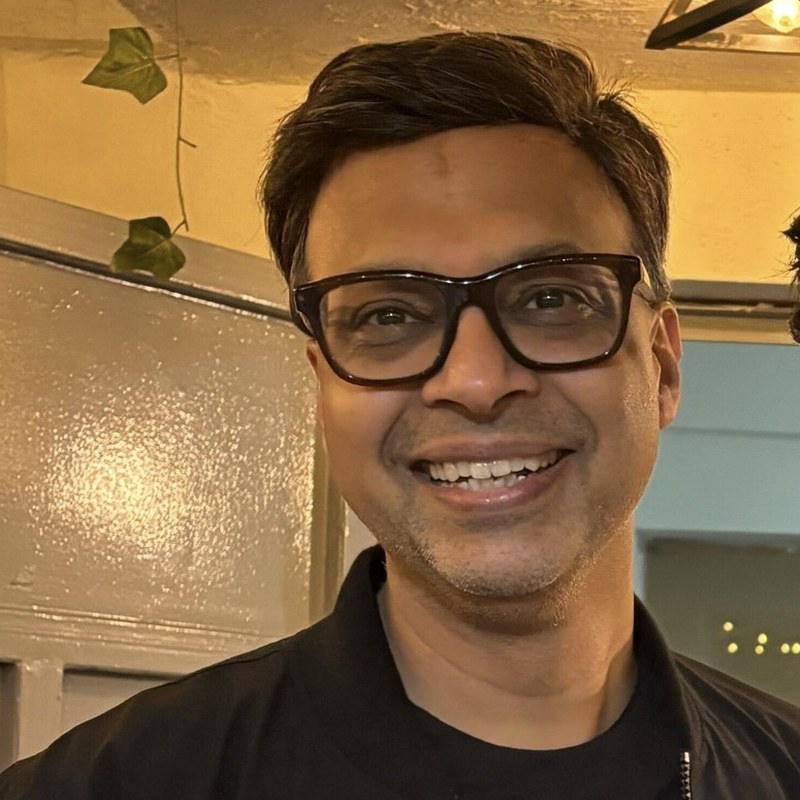
Nitin Mahajan is the founder of QuickAds and a marketing leader whose career includes more than $500 million in advertising spend and work with brands including Unilever and Apple. At QuickAds, his focus is turning research, creator selection and creative production into practical campaign decisions: who should make the content, what they should deliver and how to judge the result.
Influencer outreach means contacting creators about a brand partnership and working toward an agreed scope. A useful process connects the initial message to deliverables, fees, usage rights, dates and approval. A reply starts a conversation; the campaign is ready only when both sides understand what is being bought and the relevant terms are confirmed.
Use the creator's stated business-contact preference, such as an email address or direct message. Explain the specific fit with a reference to work you actually reviewed, then state the proposed deliverable, timing and next step. Keep the accepted brief and commercial terms in one record so the creator and brand team can work from the same version.
Include who you are, why this creator fits, what you want them to make or publish, the proposed timing and a clear next step. Give a budget range when available. Separate a production fee from paid-advertising rights, exclusivity and other uses. Ask the creator to confirm any terms that remain open before the booking is approved.
QuickAds founder Nitin Mahajan reports that, after pre-qualifying about 300 candidates to 100 contacts, 30–40% of contacted creators reply within 12–24 hours, sometimes the same day, and 50–60% reply cumulatively within three days. These are all replies, including declines. About 20–30% of contacted creators agree after negotiation; agreements and accepted deliverables are separate stages.
These are founder-reported ranges supplied 3 November 2026 from beauty, personal care and fashion campaigns, not an audited industry benchmark or a forecast. The observation period and cold/opt-in mix are not recorded for this account.